An effective plan covers five categories, applied in priority order. Getting the order right matters as much as knowing what to fix.
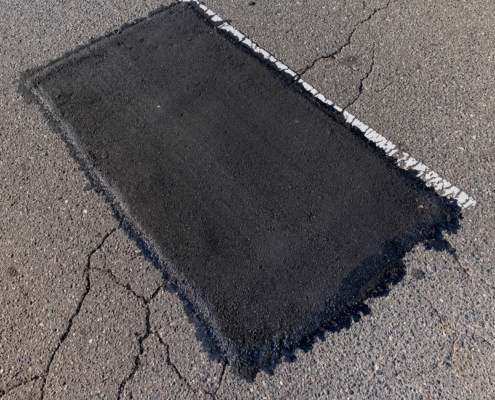
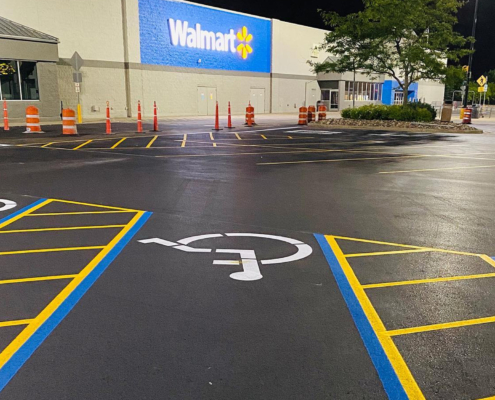
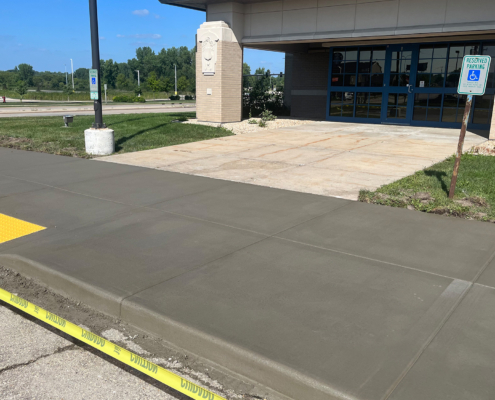
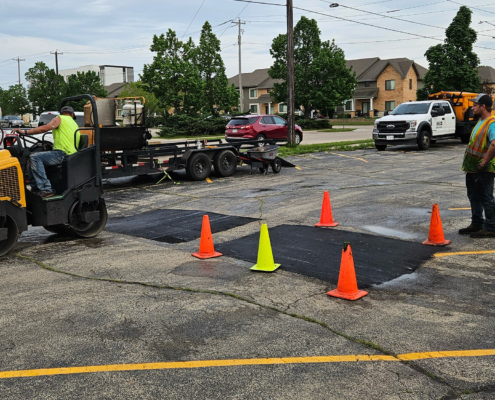
These go first, every year, because they carry liability and compliance risk. Potholes that cause vehicle damage or pedestrian trip hazards need immediate attention — pothole repair via infrared heat patching is SSI’s recommended method for most mid-size damaged areas, delivering a seamless repair without visible seams and at a lower cost than saw-cut alternatives. ADA-compliant parking markings and fire lane striping also belong in this tier. Faded or noncompliant ADA markings are not a deferred maintenance item — they are an active code issue that can result in fines for commercial property owners in Wisconsin.
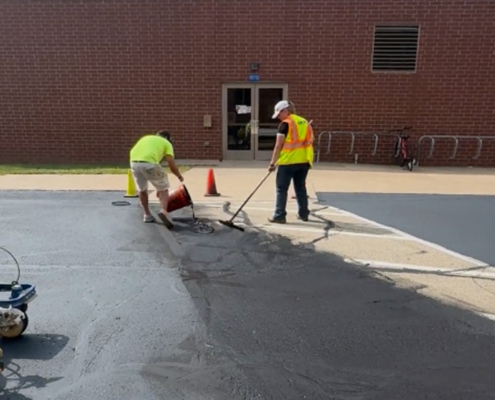
Crack filling uses Virgin Rubberized Filler with Perma-Frost Protection to seal surface cracks before moisture works its way beneath the pavement. Left untreated through a Wisconsin winter, hairline cracks become alligator cracking, and alligator cracking becomes a saw-cut and full-depth repair that costs many times more than the original fill. Sealcoating follows — it protects the pavement surface from salt, sand, chemical runoff, car oil, and UV degradation, extending usable pavement life by years. How frequently a lot needs sealcoating depends on traffic volume, surface condition, and age — not a fixed schedule.
- Aesthetics and Functionality
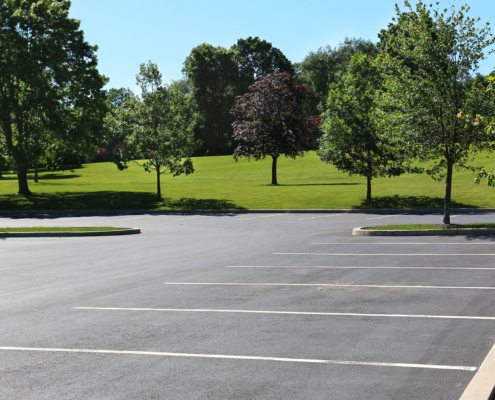
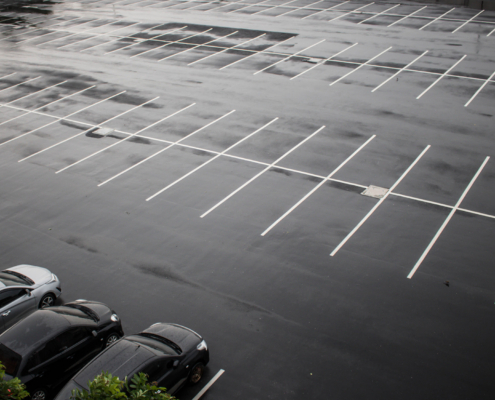
Restriping and lot layout updates come last in priority order — not because they are unimportant, but because surface paint does not address structural integrity. Freshly painted lines on a structurally compromised lot is money applied in the wrong order. Once the pavement is stable and sealed, restriping maximizes parking capacity, corrects traffic flow, and ensures the property’s first impression is a sharp one.