SSI’s team has assessed nursing homes, assisted living campuses, and memory care facilities across Wisconsin. The same compliance gaps appear at most properties that have not had a professional evaluation in the past two to three years.
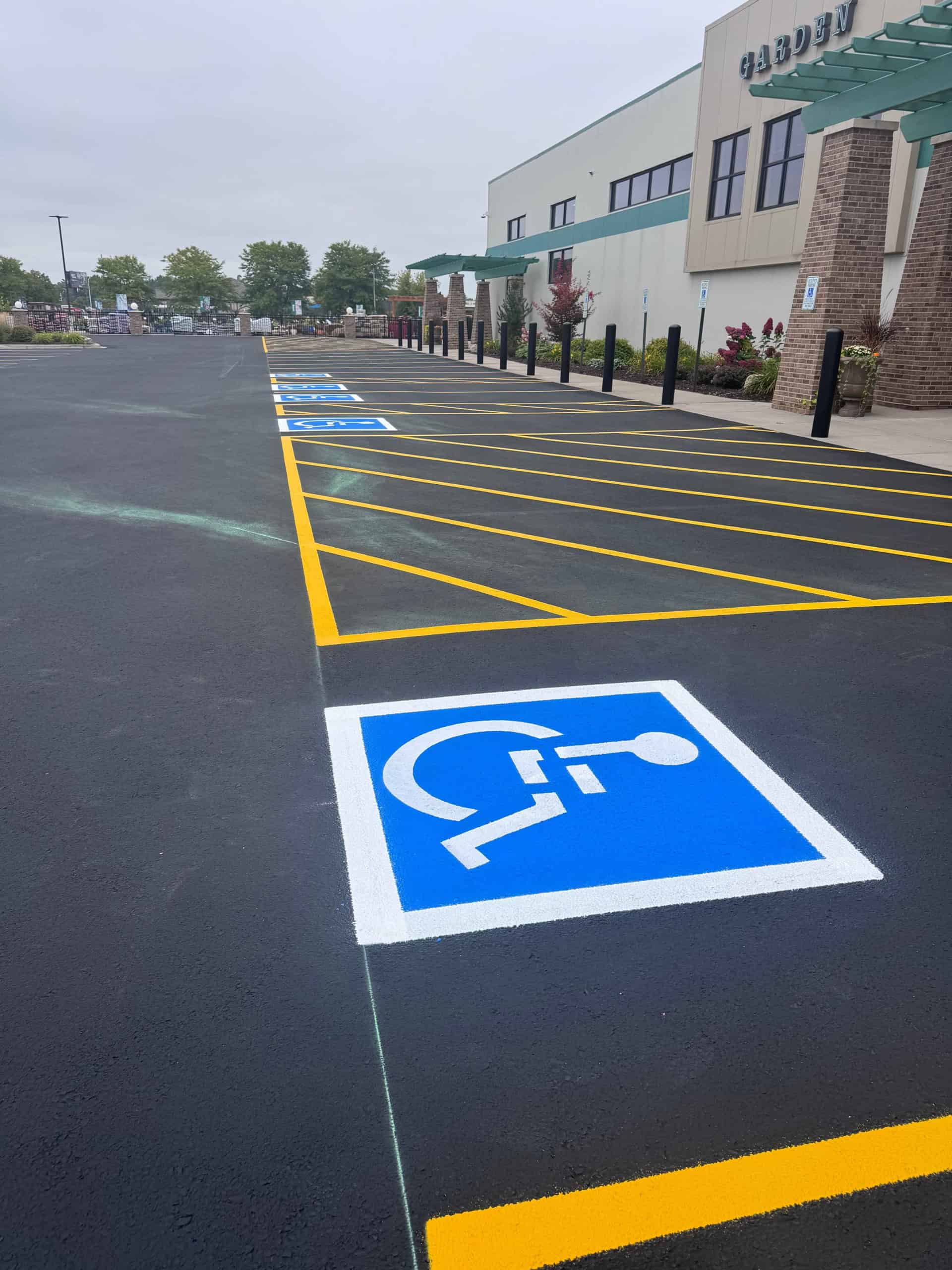
Faded stall markings and access aisles. Wisconsin winters degrade parking lot paint faster than most facility managers plan for. High-salt zones near building entrances, the same areas where accessible spaces are almost always located, break down markings faster than paint in the main lot. A marking that looks adequate in May can be all but invisible after a hard freeze and refreeze cycle. Scheduling parking lot restriping on a regular cycle prevents this from becoming a compliance issue.
Missing or incorrect van-accessible designations. Many lots have accessible spaces originally striped to code but never updated to include the required van-accessible designation. Others have the designation installed at the wrong mounting height, making them non-compliant on a technical basis even when the pavement markings appear correct.
Non-compliant access aisle widths for medical transport. Standard accessible spaces do not meet the loading requirements for wheelchair vans and medical transport vehicles. This is a gap that general striping contractors routinely miss and one that creates real safety and access problems for residents who rely on those vehicles regularly.
Slopes exceeding 2% on accessible spaces. Surface settlement from Wisconsin freeze-thaw cycles can push an accessible space above the maximum allowable slope even when the original installation was correct.