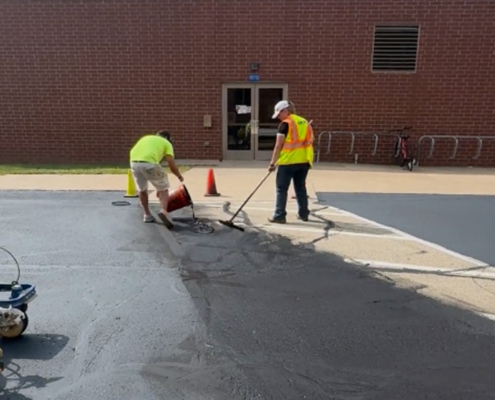
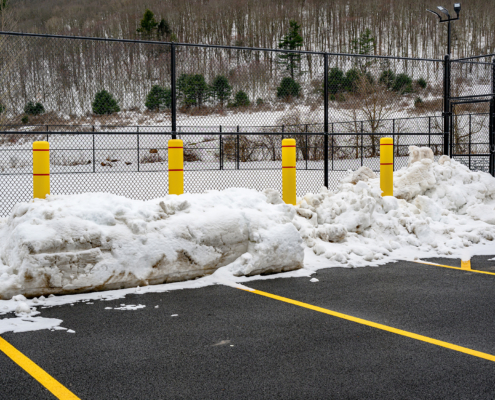
Start with the pavement itself. Walk the full lot and don’t just scan it from the entrance. You’re looking for:
Cracks wider than a quarter inch. Hairline cracks are normal surface aging. Wider cracks are entry points for water, and under summer heat, they expand faster than most property owners expect. These are the cracks that become potholes if they’re not addressed through crack filling before temperatures climb.
Alligator cracking. This interconnected, web-like pattern signals base layer failure, not just surface wear. It won’t be solved by crack filler alone. If you’re seeing alligator cracking in multiple areas, that finding should influence your summer repair budget. It’s a scope conversation, not a DIY fix.
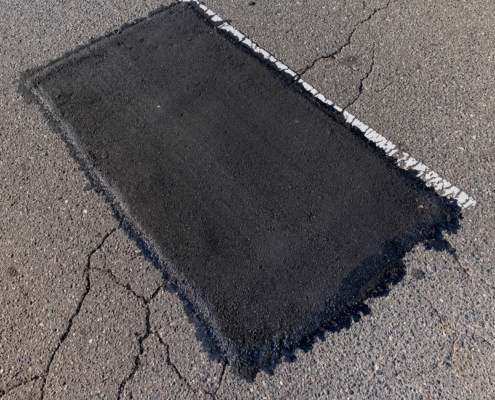
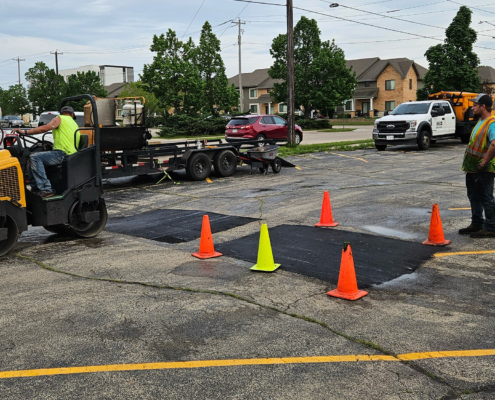
Potholes or sunken areas. Any depression or hole that’s caught water, gravel, or debris over winter needs to be assessed and repaired before summer traffic compounds the damage.
Edge deterioration. The perimeter of your lot, especially where asphalt meets curbing or unpaved areas, tends to break down faster. Crumbling edges aren’t cosmetic. They allow water intrusion that works inward over time.
When to call a professional: If you’re counting more than a handful of cracks, seeing alligator patterns, or noticing areas that feel soft underfoot, get a professional evaluation before scheduling piecemeal repairs. Treating symptoms without understanding the cause leads to repeat work.