You don’t need a contractor to recognize the early warning signs. Here’s what drainage trouble actually looks like from the ground:
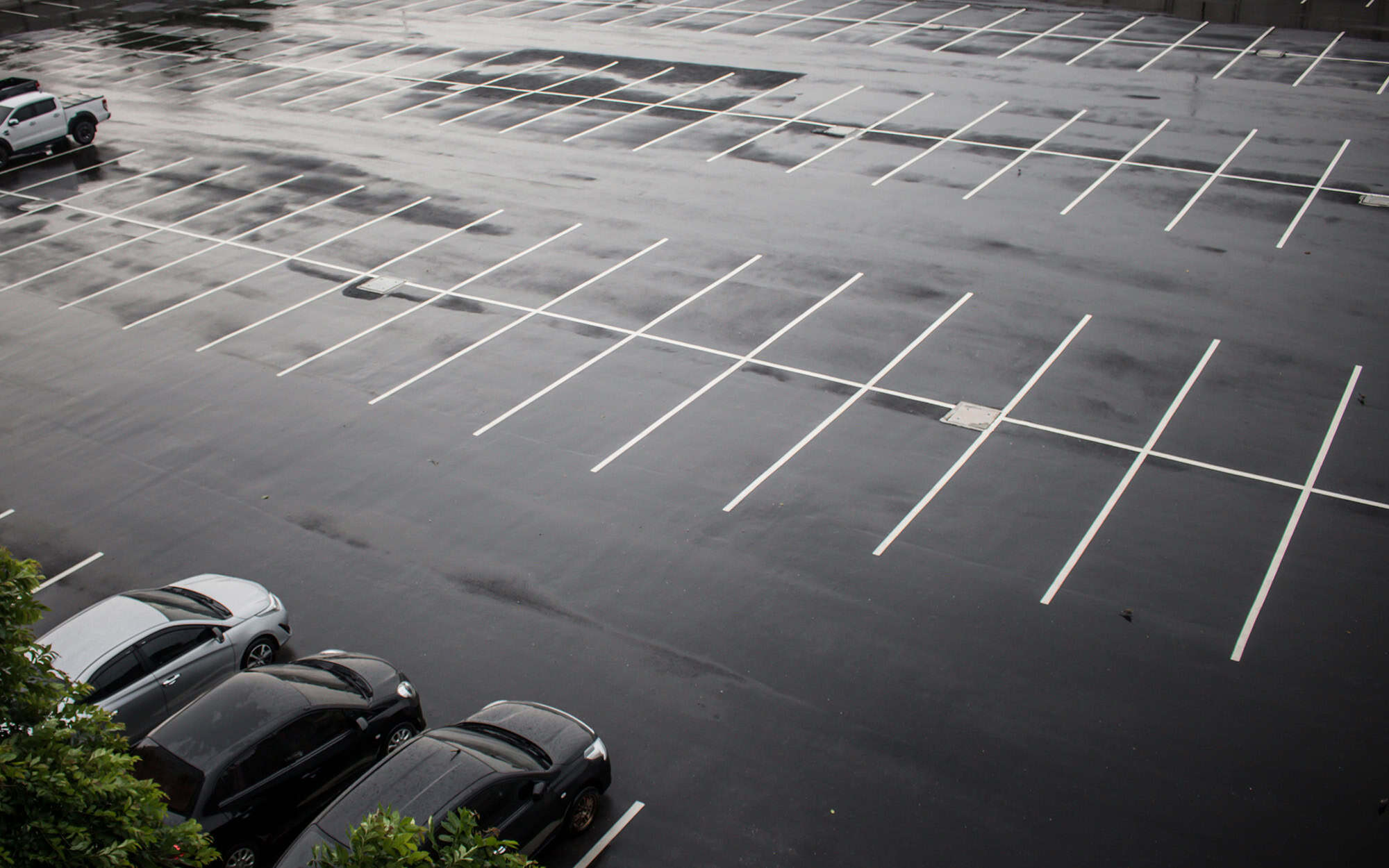
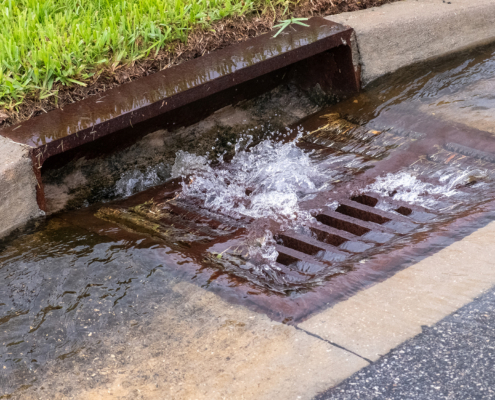
Water that lingers 24 to 48 hours after rain or snowmelt. Temporary puddling after a heavy rain is normal. Water that’s still sitting a day or two later is a sign that your lot’s grade has shifted, your drains are blocked or failing, or the surrounding soil is too saturated to accept runoff. There’s a real difference between temporary puddling and true drainage failure, and time is the clearest indicator.
Pooling in the same spots every time. Recurring pooling in specific areas tells you those spots have consistent low points or compromised subsurface drainage. The pavement may look fine from a distance, but water is reliably telling you something is wrong below the surface.
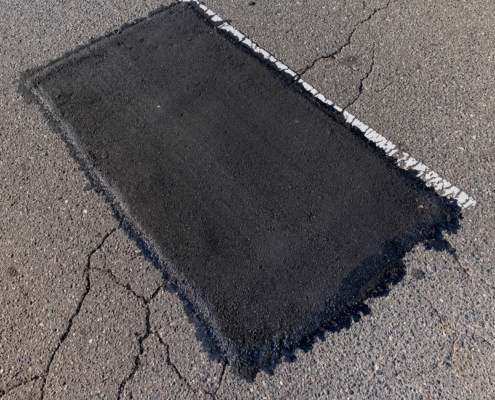
Standing water near cracks or along pavement edges. When pooling collects adjacent to existing cracks, that water is almost certainly finding its way into the base layer. This is where asphalt drainage problems transition from a nuisance to a structural concern.
Soft, spongy, or unstable pavement. If sections of your lot flex underfoot or feel unstable after wet weather, the subgrade is saturated. Pavement over a wet base can’t support vehicle loads the way it’s supposed to.
New cracks appearing in spring. Cracks that weren’t visible in the fall are a direct result of freeze-thaw expansion and water intrusion. Their presence means water has already been working beneath the surface.