Show Striping Industries
  • Parking Lot Striping
    • Restriping
    • New Lot Layout & Design
    • ADA Striping / Compliance
    • Playground Striping
    • Multisport Court Painting
    • Line Removal
    • Fire Lane Striping
  • Pavement Repair & Maintenance
    • Pothole Repair
    • Crack Fill
    • Seal Coating
    • Asphalt Paving
    • Concrete Services
  • Areas We Serve
        • Milwaukee
        • Madison / Dane County
        • Green Bay
        • Eau Claire / Chippewa Falls
        • Appleton
        • Wisconsin Valley / La Crosse
        • Janesville / Beloit
        • Fox Valley
        • Wausau / Stevens Point
        • South Central Wisconsin
  • About Us
    • Blog
    • FAQ
    • Testimonials
    • Leadership Team
    • Careers
  • Contact
  • Menu Menu

Why Infrared Heat Patching Is Ideal for Fixing Winter-Damaged Asphalt in Wisconsin

Every spring, Wisconsin property and facilities managers face the same inventory of damage: potholes that weren’t there in October, edge cracking along curb lines, depressions where frost heave shifted the pavement surface, and deteriorating patches from previous cold patch repairs that didn’t hold through another winter. The question isn’t whether repairs are needed. It’s which repair method is actually worth the investment.

Why Infrared Heat Patching Is Ideal For Fixing Winter Damaged Asphalt In Wisconsin

Infrared asphalt patching is one of the most effective and cost-efficient repair methods available for the specific types of damage Wisconsin winters produce. If you’re evaluating your options this spring, here’s what you need to know.

What Is Infrared Asphalt Patching and How Does It Work?

Infrared asphalt patching is a repair process that uses infrared heat technology to soften existing asphalt in place, blend in new material where needed, and recompact the area to create a seamless, thermally bonded repair.

The Process Step by Step

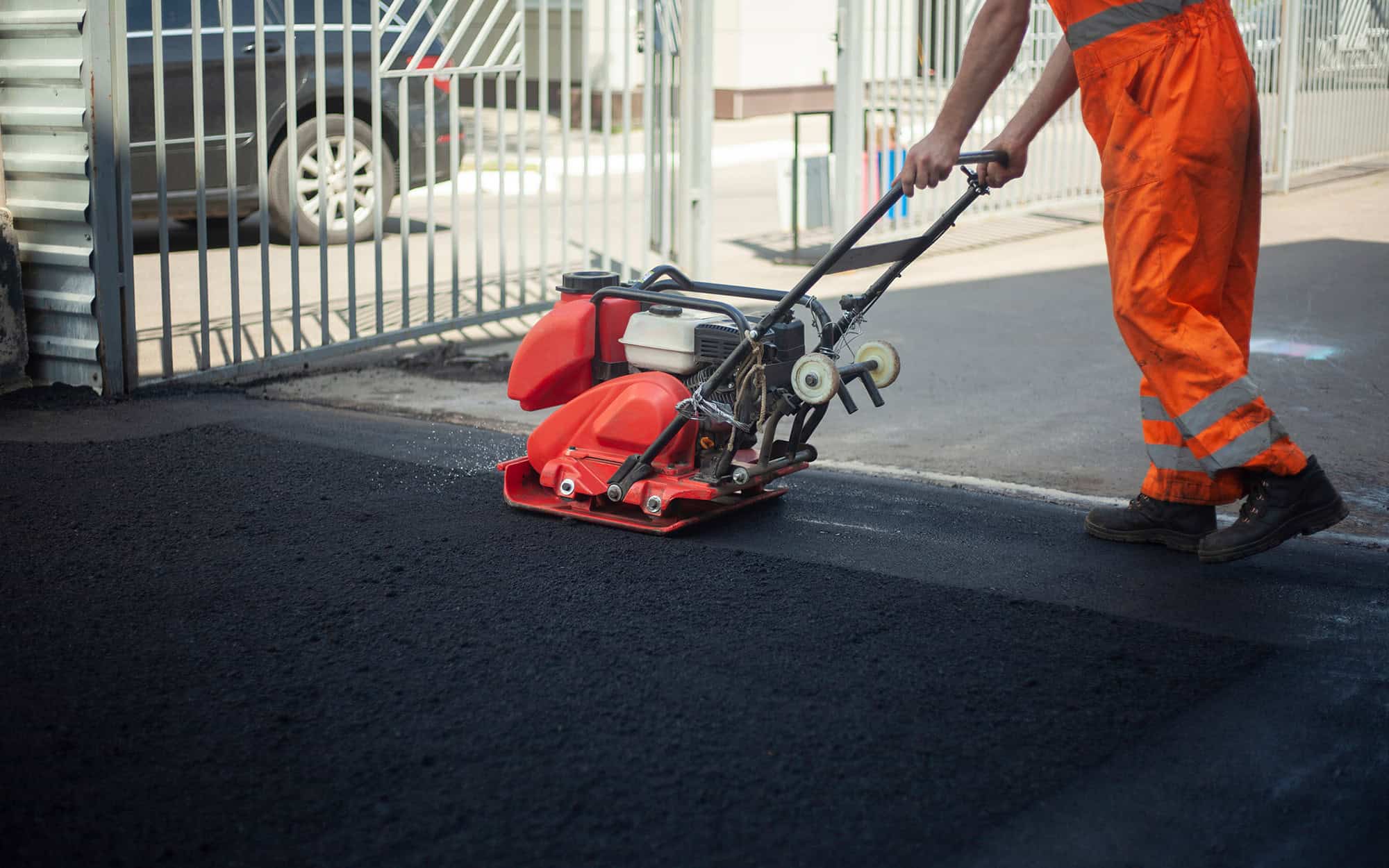
A specialized infrared heater is positioned over the damaged area and heats the existing asphalt to a workable temperature, typically between 325 and 350 degrees Fahrenheit, without burning or degrading the material. Once the asphalt is softened, a technician rakes and works the area to address the damage, adds rejuvenating material and fresh asphalt as needed, and then compacts the entire repair zone with a vibratory plate or roller.

The result is a repair that bonds with the surrounding pavement rather than sitting on top of it. There are no cold joints, no edges for water to infiltrate, and no seams for freeze-thaw cycles to exploit.

Why the Seamless Bond Matters in Wisconsin

Traditional patch repairs create a defined edge between the new material and the existing pavement. In Wisconsin’s climate, that edge is a vulnerability. Water infiltrates the joint, freezes, expands, and progressively breaks the bond between old and new material. Within one to two winters, a traditional patch is often showing edge cracking, lifting, or deterioration along its perimeter.

Infrared patching eliminates that vulnerability by fusing the repair into the surrounding pavement. There’s no cold joint. The thermal bond means the repaired area behaves as a continuous surface rather than a patch sitting in a hole.

Why Wisconsin Winter Damage Is Particularly Well Suited to Infrared Repair

Not all pavement damage is created equal. Wisconsin’s specific failure modes align closely with what infrared patching does best.

Potholes From Freeze-Thaw Cycles

Wisconsin potholes are almost universally the result of freeze-thaw cycle damage: water infiltrates a crack, freezes and expands, weakens the surrounding material, and traffic load does the rest. Infrared patching addresses this failure mode directly by restoring the integrity of the surrounding asphalt during the repair, not just filling the hole.

Edge Cracking and Joint Failures

Cracking along pavement edges, curb lines, and joints between pavement sections is extremely common in Wisconsin lots that have experienced repeated thermal stress. Infrared patching is particularly effective for edge repairs because it can be applied along irregular linear damage zones, softening and reintegrating the cracked material rather than cutting out sections and installing cold patch fills that won’t bond.

Frost Heave Depressions and Distortion

Areas of pavement that have shifted, settled, or heaved due to frost pressure often create surface irregularities that collect water and accelerate further damage. Infrared patching allows technicians to rework and regrade these areas in place, restoring a proper surface profile without full-depth excavation.

Failed Cold Patch Repairs

Cold patch is frequently used as an emergency winter repair to address potholes quickly when permanent repair isn’t feasible. By spring, many of those temporary repairs have deteriorated. Infrared patching is an effective way to address failed cold patch areas, softening and removing the temporary fill and replacing it with a permanent thermally bonded repair.

We provide professional infrared asphalt patching and pavement repair services for commercial, institutional, and municipal properties across Wisconsin.

Get a Quote

Infrared Patching vs. Cold Patch vs. Saw-Cut Removal and Replacement

Understanding how infrared patching compares to the alternatives helps you make an informed decision about which method is right for your situation.

vs. Cold Patch

Cold patch is a temporary repair material applied without heat. It’s inexpensive and can be applied in cold weather, which makes it useful for emergency winter repairs. Its limitations are significant: it doesn’t bond thermally to the surrounding pavement, it deteriorates quickly under traffic load, and it typically fails within one to two seasons in Wisconsin’s freeze-thaw climate. Cold patch is a stopgap, not a repair.

vs. Saw-Cut Removal and Replacement

Traditional hot mix saw-cut repair involves cutting a defined section of pavement, removing it, and replacing it with new hot mix asphalt. It’s an effective permanent repair for significant structural damage. It’s also significantly more expensive, more disruptive, and requires scheduling around hot mix plant availability, which can be limited in early spring. For surface-level and moderate damage scenarios, infrared patching delivers comparable durability at meaningfully lower cost and disruption.

Where Each Method Makes Sense

Cold patch is appropriate only as a temporary winter emergency repair. Saw-cut replacement is appropriate for large-scale structural failures or areas where the base layer has failed. Infrared patching is the right choice for the vast majority of spring repair scenarios in Wisconsin: potholes, edge cracking, frost heave distortion, utility cut failures, and deteriorated previous patches where the base layer remains intact.

Properties and Scenarios Where Infrared Patching Delivers the Best Results

Commercial Parking Lots

High-traffic commercial parking lots accumulate pothole and edge damage faster than lower-use surfaces. Infrared patching allows repairs to be completed quickly with minimal traffic disruption, and the seamless result holds up better under continuous vehicle load than cold patch alternatives.

School and Institutional Campuses

School parking lots and campus drives see concentrated traffic load during arrival and dismissal, and safety standards for these surfaces are high. Spring infrared patching can be scheduled during lower-traffic periods to minimize disruption while restoring safe, compliant surfaces ahead of the end-of-year activity season.

Municipal Streets and Parking Facilities

Municipal properties with large pavement inventories benefit significantly from infrared patching’s speed and cost efficiency. Multiple repair locations can be addressed in a single mobilization, and the reduced per-repair cost compared to saw-cut replacement allows municipalities to address more damage within the same maintenance budget.

What to Expect From Scheduling and Execution

Infrared patching requires ambient temperatures and dry pavement conditions to be effective, which means early spring repairs are weather-dependent. In Wisconsin, the practical window for infrared patching typically opens in April as temperatures stabilize and pavement dries following snowmelt.

A typical infrared patch repair on a standard pothole or edge failure can be completed in under an hour per location. Larger or more complex damage areas take longer but are still significantly faster than saw-cut alternatives. Repaired areas are generally ready for traffic within a short period after compaction, with minimal disruption to property operations.

If your lot also needs sealcoating, pavement repairs should always be completed and fully cured before sealcoating is applied. Our sealcoating and restriping post covers the correct maintenance sequence in detail.

Spring scheduling for pavement repair in Wisconsin fills up quickly once conditions allow. Getting on a contractor’s schedule early gives you more flexibility on timing and ensures repairs are completed before deterioration worsens through another season of traffic load.

Infrared Asphalt Patching for Wisconsin Properties

SSI provides professional infrared asphalt patching and pavement repair services for commercial, institutional, and municipal clients across Wisconsin. We understand the specific damage patterns Wisconsin winters produce and the repair methods that address them with lasting results.

Whether you’re dealing with a handful of potholes, widespread edge cracking, or a parking lot full of failed cold patch repairs from last winter, we’re ready to assess your pavement and give you a straight recommendation on the right scope and approach.

Share This Post

  • Share on Facebook
  • Share on X
  • Share on Pinterest
  • Share on LinkedIn
  • Share on Tumblr
  • Share on Vk
  • Share on Reddit
  • Share by Mail

More Like This

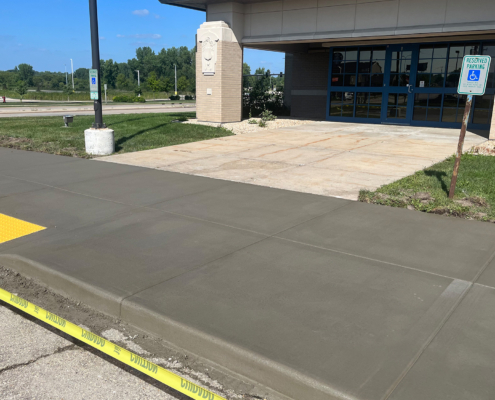
Concrete Sidewalk In Front Of Commercial Building Entrance

Commercial Concrete Services for Parking Lots: Dumpster Pads, Curbs, Sidewalks, and More

Maintenance and Repair, Pavement Repair
https://ssiamerican.com/wp-content/uploads/2025/02/Concrete-Sidewalk-in-Front-of-Commercial-Building-Entrance.jpg 1250 2000 Abstrakt Marketing /wp-content/uploads/2025/01/SSI-Logo-1030x451.webp Abstrakt Marketing2026-06-17 07:32:302026-06-17 07:32:33Commercial Concrete Services for Parking Lots: Dumpster Pads, Curbs, Sidewalks, and More
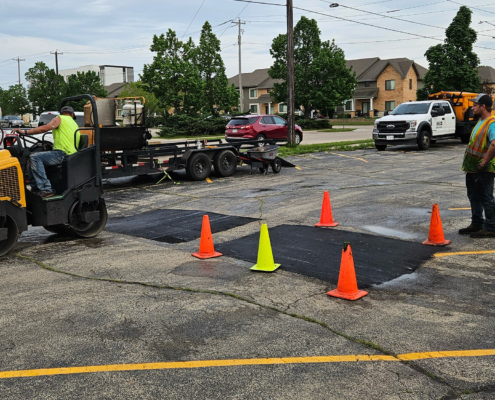
Ssi Workers Repairing Potholes In Parking Lot

Why Early Spring Is the Best Time for Parking Lot Repair in Wisconsin

Pavement Repair, Pavement Replacement
https://ssiamerican.com/wp-content/uploads/2025/02/SSI-Workers-Repairing-Potholes-in-Parking-Lot.jpg 1250 2000 Abstrakt Marketing /wp-content/uploads/2025/01/SSI-Logo-1030x451.webp Abstrakt Marketing2026-03-10 13:22:522026-05-07 10:32:35Why Early Spring Is the Best Time for Parking Lot Repair in Wisconsin
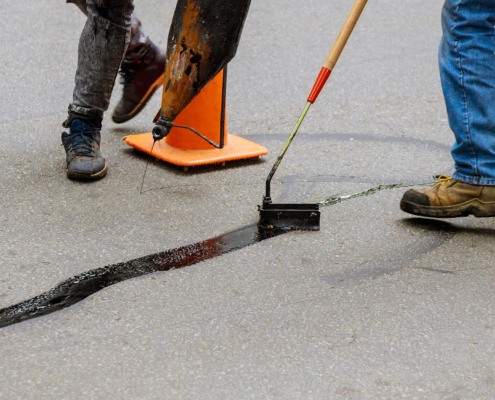
Person Using Tools To Fill Cracks In Asphalt Parking Lot

A Guide to Parking Lot Crack Repairs

Pavement Repair
https://ssiamerican.com/wp-content/uploads/2025/02/Person-Using-Tools-to-Fill-Cracks-in-Asphalt-Parking-Lot.jpg 1250 2000 Abstrakt Marketing /wp-content/uploads/2025/01/SSI-Logo-1030x451.webp Abstrakt Marketing2025-06-03 07:43:242026-05-07 10:32:47A Guide to Parking Lot Crack Repairs
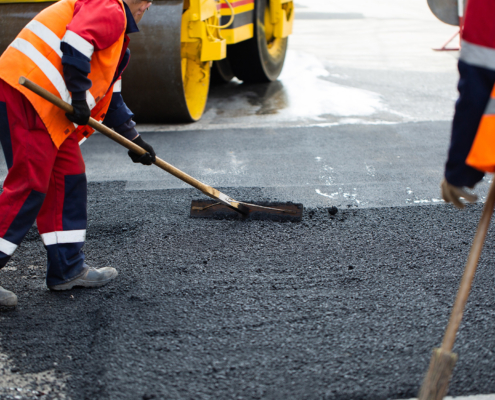
Common Asphalt Repair Needs And How To Fix Them

A Guide to Common Asphalt Repairs 

Pavement Repair
https://ssiamerican.com/wp-content/uploads/2025/06/Common-Asphalt-Repair-Needs-and-How-to-Fix-Them.jpg 1250 2000 Abstrakt Marketing /wp-content/uploads/2025/01/SSI-Logo-1030x451.webp Abstrakt Marketing2025-06-03 07:35:182026-05-07 10:32:48A Guide to Common Asphalt Repairs 
Rs=w 1280

Are you in need of a refresh or asphalt maintenance?

Pavement Repair, Pavement Replacement
https://ssiamerican.com/wp-content/uploads/2024/12/rsw_1280.jpeg 1707 1280 Abstrakt Marketing /wp-content/uploads/2025/01/SSI-Logo-1030x451.webp Abstrakt Marketing2024-12-05 16:36:212026-05-07 10:32:52Are you in need of a refresh or asphalt maintenance?
Previous Previous Previous Next Next Next

Categories

  • ADA Compliance
  • Design
  • Fire Lane Striping
  • Lot Layout
  • Maintenance and Repair
  • Miscellaneous
  • Parking Lot Striping
  • Pavement Repair
  • Pavement Replacement
  • Playground
  • Pot Hole Repair
  • Seal Coating
  • Sport Court
Ssi Logo

Get In Touch

Phone
608-253-0999

Email
[email protected] 

Address
1217 Clara Ave., Suite C
Wisconsin Dells, WI 53965

Services

Parking Lot Striping

Pavement Repair & Maintenance

Playground Striping

Multisport Court Painting

About Us

Show Striping Industries offers complete parking lot striping services for commercial properties.

Website by Abstrakt Marketing Group ©
  • Sitemap
  • Privacy Policy
Link to: How to Tell If Your Parking Lot Needs Sealcoating and Restriping After a Wisconsin Winter Link to: How to Tell If Your Parking Lot Needs Sealcoating and Restriping After a Wisconsin Winter How to Tell If Your Parking Lot Needs Sealcoating and Restriping After a Wisconsin...How To Tell If Your Parking Lot Needs Sealcoating And Restriping After A Wisconsin Winter Link to: How to Recognize Parking Lot Drainage Issues in Wisconsin Link to: How to Recognize Parking Lot Drainage Issues in Wisconsin How To Recognize Parking Lot Drainage Issues In WisconsinHow to Recognize Parking Lot Drainage Issues in Wisconsin
Scroll to top Scroll to top Scroll to top

This site uses cookies. By continuing to browse the site, you are agreeing to our use of cookies.

AcceptLearn more

Cookie and Privacy Settings


How we use cookies

We may request cookies to be set on your device. We use cookies to let us know when you visit our websites, how you interact with us, to enrich your user experience, and to customize your relationship with our website.

Click on the different category headings to find out more. You can also change some of your preferences. Note that blocking some types of cookies may impact your experience on our websites and the services we are able to offer.

Essential Website Cookies

These cookies are strictly necessary to provide you with services available through our website and to use some of its features.

Because these cookies are strictly necessary to deliver the website, refusing them will have impact how our site functions. You always can block or delete cookies by changing your browser settings and force blocking all cookies on this website. But this will always prompt you to accept/refuse cookies when revisiting our site.

We fully respect if you want to refuse cookies but to avoid asking you again and again kindly allow us to store a cookie for that. You are free to opt out any time or opt in for other cookies to get a better experience. If you refuse cookies we will remove all set cookies in our domain.

We provide you with a list of stored cookies on your computer in our domain so you can check what we stored. Due to security reasons we are not able to show or modify cookies from other domains. You can check these in your browser security settings.

Other external services

We also use different external services like Google Webfonts, Google Maps, and external Video providers. Since these providers may collect personal data like your IP address we allow you to block them here. Please be aware that this might heavily reduce the functionality and appearance of our site. Changes will take effect once you reload the page.

Google Webfont Settings:

Google Map Settings:

Google reCaptcha Settings:

Vimeo and Youtube video embeds:

Accept settingsHide notification only