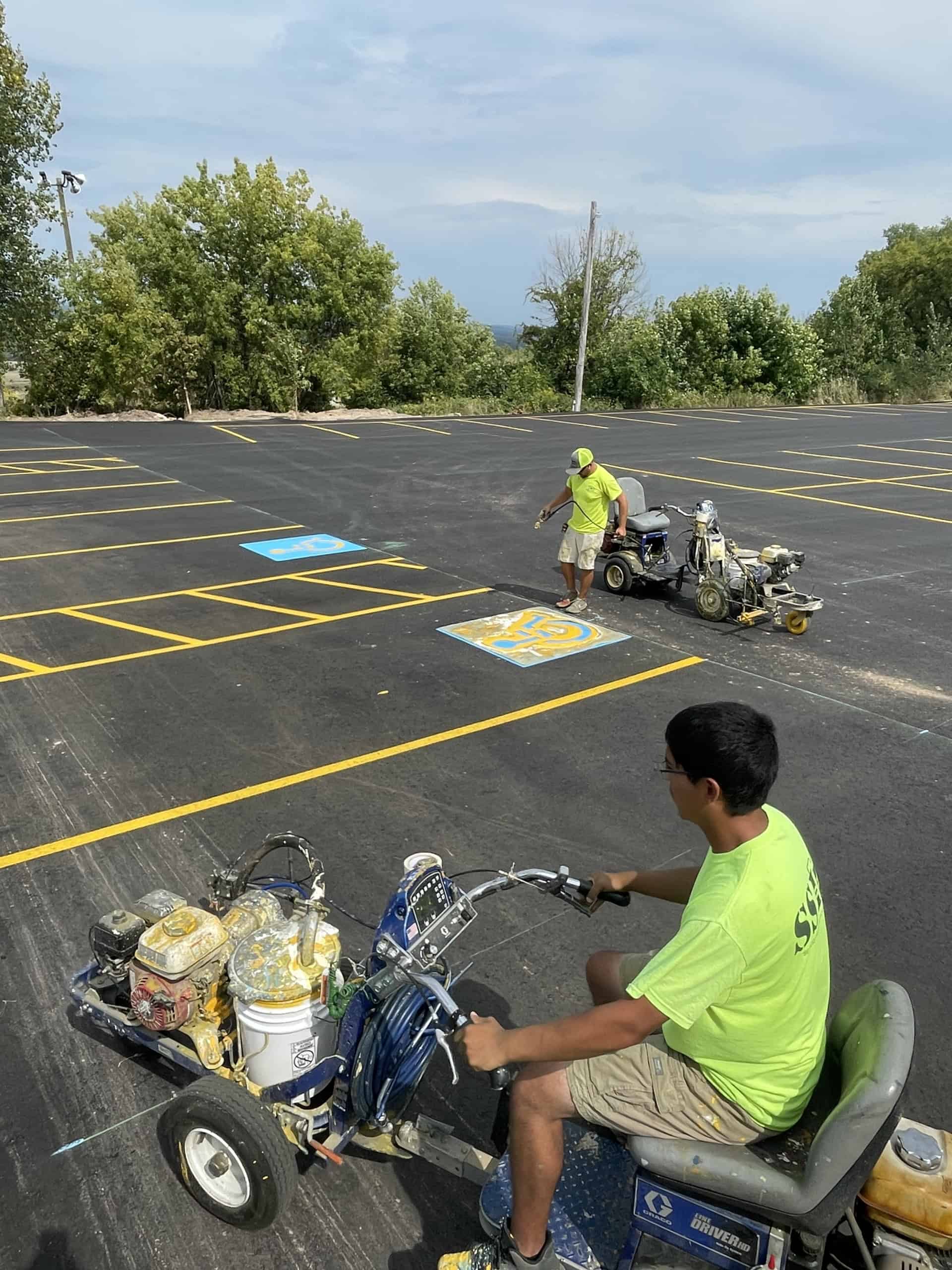
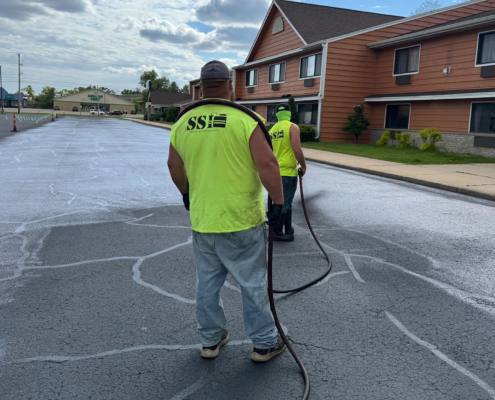
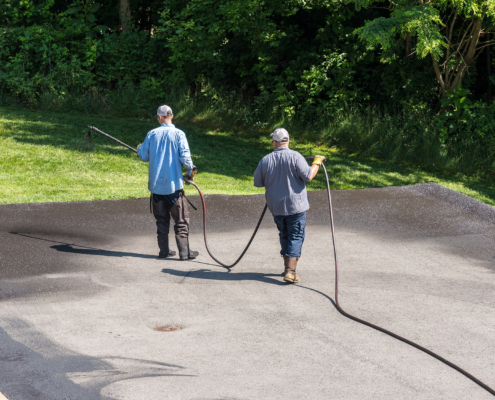
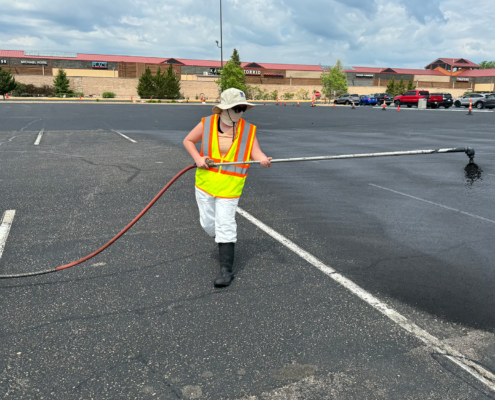
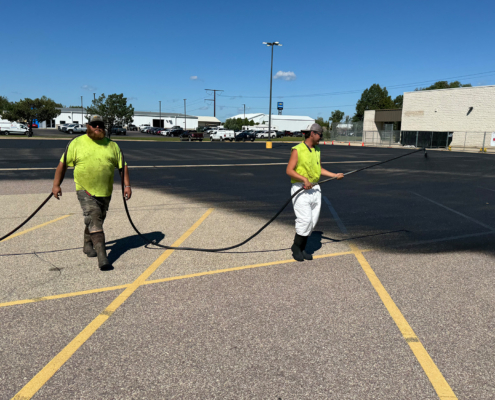
Before anything else, there’s a technical reality about sealcoating that every property manager should understand before they schedule the work: sealcoating covers and significantly fades existing parking lot striping. In most cases, a fresh sealcoat leaves previous line markings nearly invisible.
This surprises a lot of property owners. They schedule a sealcoat job expecting a refreshed parking lot and end up with a dark, unmarked surface where their lines used to be. It’s not a mistake — it’s just how the material works. Sealant is a coating that goes over the entire asphalt surface. Lines painted beneath it get buried.
What makes this more than an aesthetic issue is what those lines include: ADA-compliant accessible parking spaces, van-accessible designations, crosshatching, access aisles, and painted signage. When sealcoating covers those markings, the property is no longer in compliance with the Americans with Disabilities Act regardless of whether the spaces were compliant before the sealcoat went down.
ADA violations carry real liability exposure. Non-compliant accessible parking can result in complaints, fines, and legal action. The fastest way to trigger a compliance gap is to sealcoat a parking lot and not immediately restripe it. The fastest way to close that gap — before it opens — is to have restriping scoped and scheduled as part of the same project.